Conservation & environmental education
Conservation Learning Experience
Place-based stewardship training for visitors, volunteers, and seasonal staff
- Format
- Place-based scrolling experience with field interactions
- Audience
- Volunteer stewards, seasonal interpretive staff, and site visitors
- Length
- 30–35 minutes
- Sections
- 5
Portfolio demonstration. This course was designed and built by Kirsten Alburg to show instructional design capability. It was not created for a client and is not built in Articulate.
The situation
Your first shift at Sanderling Point
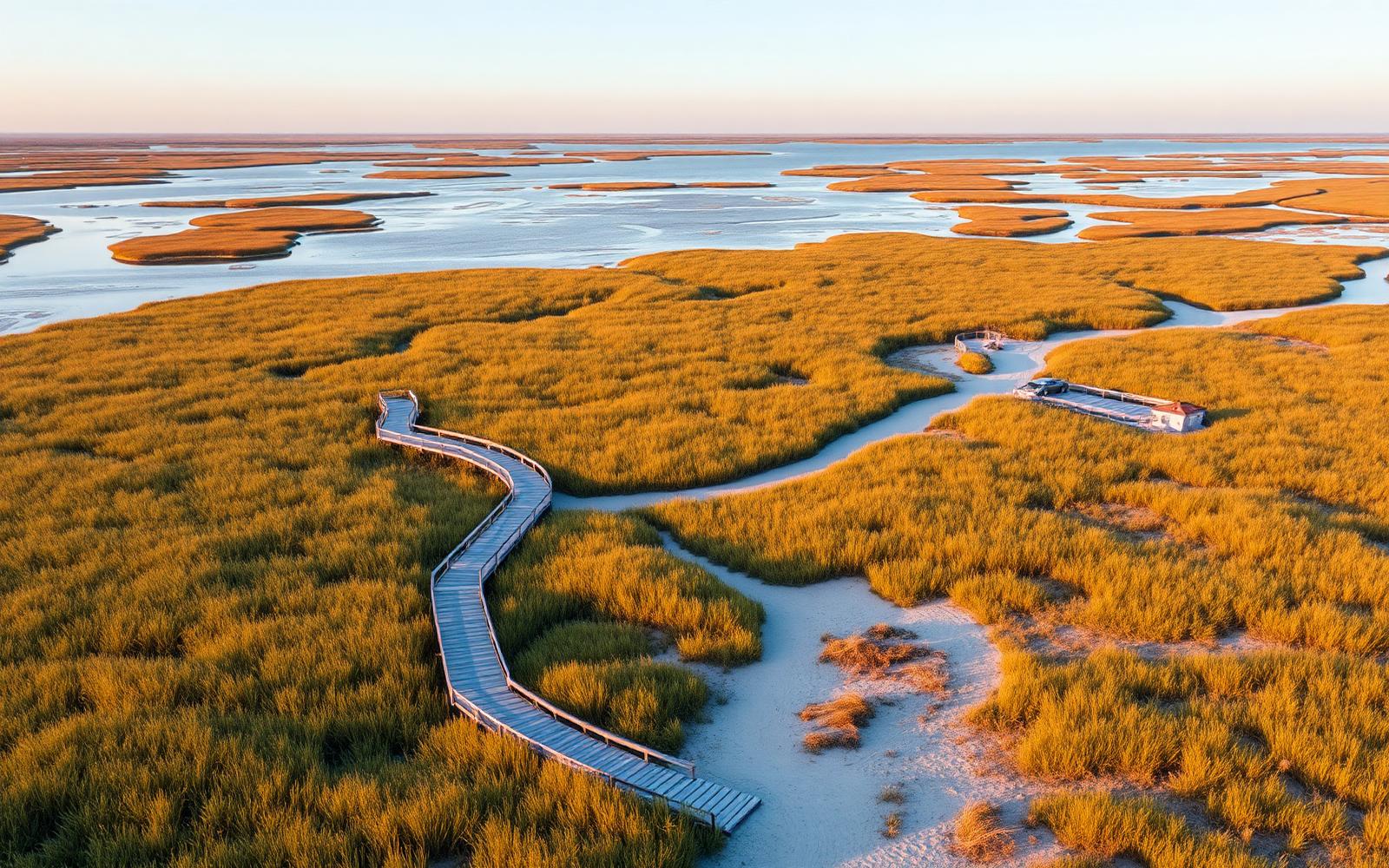
Before anything else, decide how you will spend the shift
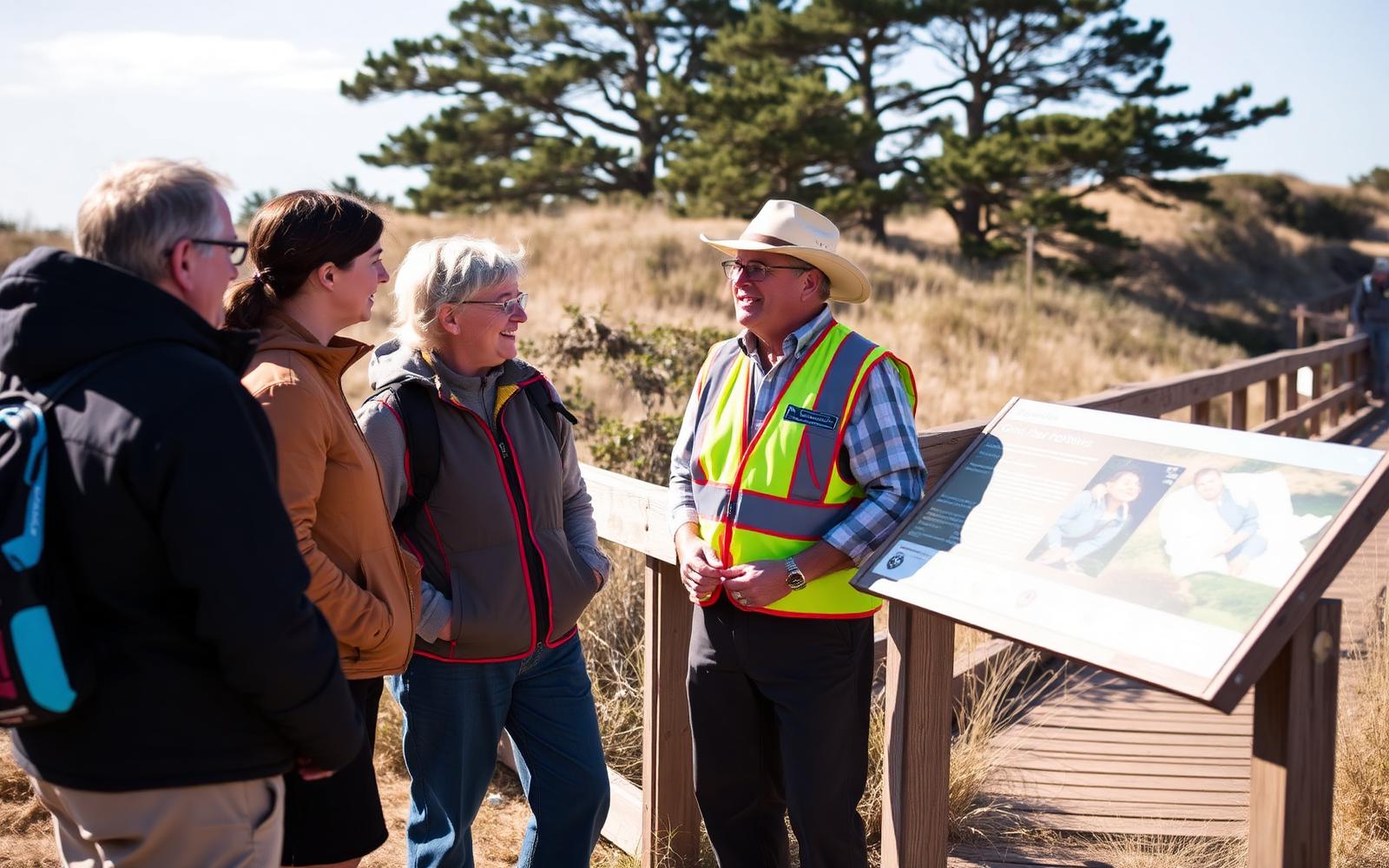
You are the new volunteer steward. The preserve manager hands you a vest, a radio, and one sentence: "Nesting season starts Friday and last year we lost two nests to off-leash dogs." You have six hours and no script.
Where will your six hours actually change something?
What this shift will teach you to do
0/5 tracked- Why it matters
- Sanderling Point loses nests to ordinary people having ordinary good days. Every loss is preventable at a conversation that lasts under a minute — but only if the steward knows which minute, and what to say inside it.
- Where you will use it
- The same structure transfers to any place-based program: park interpretation, museum floor staff, trail crews, watershed volunteers, and school field programs.
Analyze
Read the landscape
Where behavior is decided
Conservation education fails when it treats a whole site as one audience. Explore the preserve and find the four places where a visitor's choice becomes an outcome. Select each marker.
Select a numbered marker on the photograph to read what a designer would notice there.
Explored 0 of 4 markers.
Three analysis habits this modeled
Find the decision, not the topic
The topic was shorebird ecology. The decision was which side of a rope to walk on. Objectives written against the decision produce measurable programs; objectives written against the topic produce brochures.
Design for the encounter you will actually get
One interrupted outdoor conversation, wind, a distracted parent, a child pulling on a leash. Anything requiring sustained attention has already failed the context analysis.
Make the invisible consequence visible
When the outcome of a behavior cannot be seen from where the behavior happens, the designer's job is to bring it into the moment — an image, a number, a bird call, a scope already focused on a nest.
Practice
The conversation at the rope
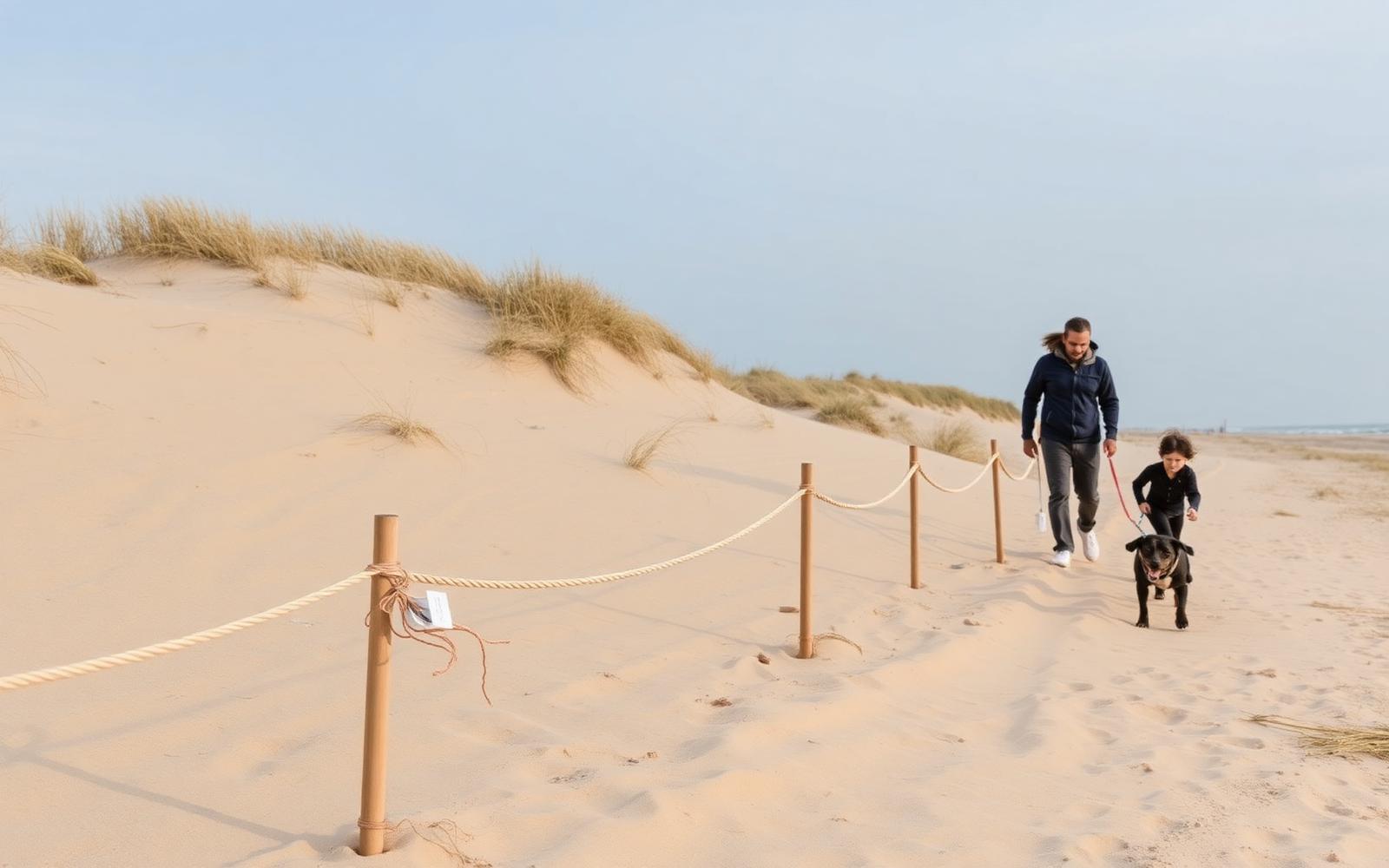
Handle it
Three decisions, each shaped by the last. There is no scolding option that works — watch what different framings actually produce.
Moment 1
The dog is off leash and drifting toward the rope. The parent has seen you and is already slightly braced for a confrontation.
How do you open?
Field job aid
Sanderling Point — Steward Conversation Card
Real performance support: pocket-sized, six lines, usable in wind with a dog barking. Download it and note what is not on it — no ecology, no policy, no script to memorize.
Performance support like this is what keeps the behavior alive after the course ends.
Apply
Citizen science, done accurately
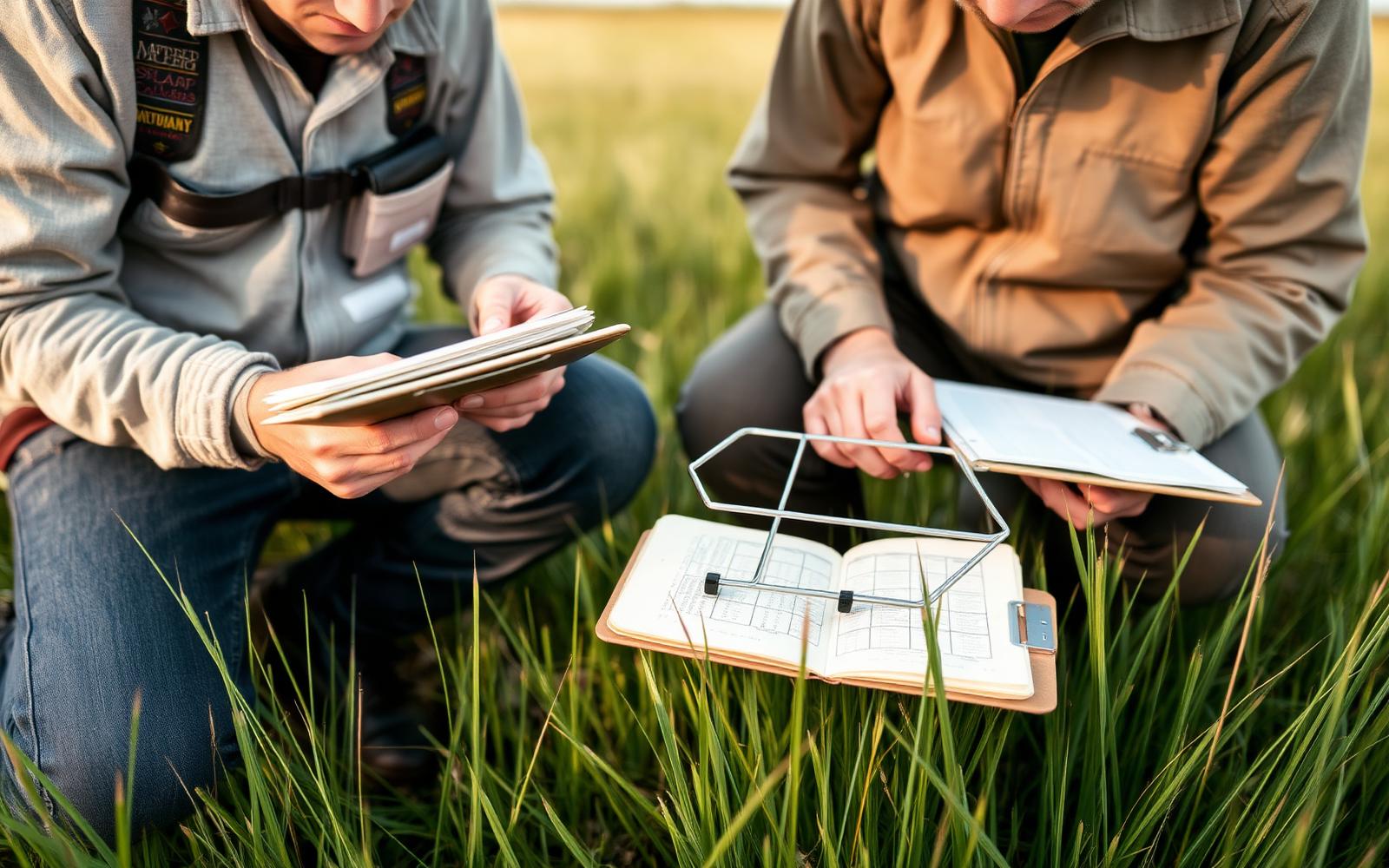
What belongs in the observation record?
Volunteers are about to log a nesting observation. Sort each entry into what the science team can use and what quietly corrupts the dataset.
Usable observation
Corrupts the dataset
Designing the protocol training
You have ninety minutes with new volunteers and a dataset that has been unusable for two seasons. Which design choices actually fix it? Select all that apply.
Pause and connect
0 wordsResponses stay in your browser — this is a portfolio demonstration, nothing is submitted.
Measure & sustain
Making it last past your shift
The program before and after redesign
Same site, same science, same budget. What changed was where the learning was placed and what it asked for.
- Interpretive content concentrated at a kiosk most visitors walked past.
- Message was awareness-level: "this is a fragile ecosystem."
- Seasonal staff trained on species content and site history.
- Success measured by materials distributed and programs offered.
- Volunteer observation data unusable due to inconsistent recording.
Design insight: None of these changes required new content. They required moving the learning to the moment of decision and narrowing the ask until it was possible to do — and possible to observe.
Final decision
Two months in, observed off-leash incidents at the fork have dropped sharply, but the preserve manager asks whether the program is 'really working.' What is the strongest evidence to bring?
Your takeaway
0 wordsResponses stay in your browser — this is a portfolio demonstration, nothing is submitted.
Take these with you
- Steward conversation cardThe six-line pocket aid from this course — the whole method, sized for the field.
- Decision-point site auditA short walk-through worksheet for finding where behavior is actually decided at any site.
- Volunteer protocol calibration sessionThe 90-minute agenda that fixes observer inconsistency before it reaches the dataset.
- Seasonal staff facilitation guideCuriosity → visible consequence → one ask, with practice rounds and coaching prompts.
Shift complete
You read a site for its decision points, held a stewardship conversation that changed a behavior without shaming anyone, calibrated a citizen science protocol, and chose a measure that connects learning to mission.
Next steps: run the decision-point audit on one site you know, narrow one message to a single observable behavior, and pick the measure before you build anything.
This demonstration models place-based learning design, behavior-focused objectives, SME translation, and evaluation planning — the same approach applied in Kirsten's conservation and science communication work.
Your scorecard
Curious0
XP earned
0
Interactions
0
Best streak
Badges
Points, streaks, and badges are part of the demonstration — they model how light gamification can keep adult learners moving without turning training into a game show.
Behind the build
Design Decisions
The instructional thinking behind this learning experience. Every interaction has a purpose; every design decision supports a learning objective.
Learning challenge
The science at the preserve was strong and the visitor behavior was not changing. Signage explained why the dunes matter; it never told anyone what to do at the moment they stepped over the rope.
Audience
- Primary learners
- Volunteer stewards, seasonal interpretive staff, and visiting families.
- Prior knowledge
- High interest, low technical background. Most volunteers can name the species but have never been coached on how to approach a stranger.
- Learning need
- A repeatable way to read a site, start a conversation, and record usable field data.
- Context of use
- Learned before a shift and recalled outdoors, in wind, with a visitor already walking toward the rope.
Learning objectives
- Identify the points on a site where visitor behavior is actually decided.
- Open a stewardship conversation with curiosity rather than correction.
- Record citizen science observations that survive review.
- Choose the one behavior worth asking for in any single interaction.
Design case study
Read the full breakdownChallenge
A coastal preserve had strong science, well-produced interpretive materials, and no change in visitor stewardship behavior. Nesting losses continued and the education program was being asked to justify its funding with something other than attendance.
Instructional strategy
Move the learning to the moment of decision, narrow the ask to one observable behavior, make the invisible consequence visible inside the encounter, and train staff on a repeatable conversation sequence rather than on content recall.
Reflection
The strongest version of this work was the smallest: one behavior, at one place, said one way by every steward. Most conservation education struggles because it is generous with content and vague about the ask — reversing that ratio is the design move that changed the outcome.
Keep exploring
- Science & Technical CommunicationScience Communication TrainingTurning complex ideas into understanding
- Faculty & SME DevelopmentDesigning Better Online LearningKirsten's signature course for faculty, trainers, and subject matter experts
- Corporate L&DEmployee Onboarding ExperienceA guided first-week experience for new corporate hires